






 :Article :Necessary discipline :
:Article :Necessary discipline :
:Article :Necessary discipline :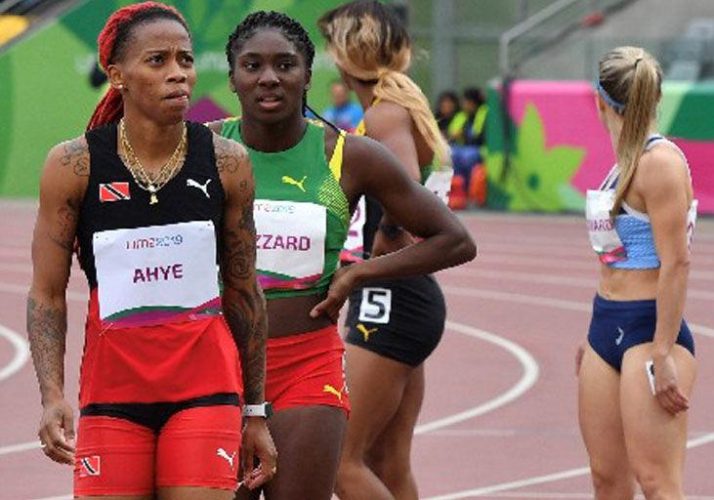
Everywhere you go there are reminders of the abundant natural talent in this place.
Yesterday, with the first cricket coaching session of the season in the Aranjuez Savannah already wrapped up, a handful of boys, all under ten years of age, begged to continue for a little while longer.
Those few minutes of helter-skelter enthusiasm highlighted the skill of one particular participant, barely the height of the stumps, who batted, bowled, fielded and generally did everything at a level well beyond his few years.
But that could be said of so many boys and girls across all sporting disciplines from Icacos to Charlotteville. There are always one or two who are a class apart, who seem destined for greater things if only the opportunities were to come their way.
We continue to be reminded though that skill, however extraordinary, is not enough. There must be discipline, dedication, a commitment to continuous hard work and a recognition of the contemporary reality which demands much more of the elite athlete than he or she is often capable of providing without the necessary support.
Obviously this is a lead-up to the latest developments which have cast an ominous shadow over the national men’s track cycling team and now premier female sprinter Michelle-Lee Ahye. I won’t go anywhere near the specifics because of the potential for complicated and costly legal entanglements.
And after getting myself tied up like a market crab in the exchange with Attorney General Faris Al-Rawi last Thursday on Morning Edition on TV6, it appears safer, and indeed more relevant, to look at the bigger picture.
Clearly both situations – medals stripped from Pan Am competition last year due to one cyclist reportedly testing positive for a prohibited substance and Ahye suspended for two years due to three “whereabouts” violations within a 12-month period – could and should have been avoided.
Whether it is a case of carelessness, lack of attention to detail or any other issue which any one of us may be guilty of regularly without the penalty of such high-profile and potentially debilitating sanction, the fact is, as Trinidad and Tobago Olympic Committee president Brian Lewis and his NAAA’s counterpart Ephraim Serrette pointed out in reacting to the Ahye situation, athletes know the rules and the consequences for violating those guidelines.
So why should this be happening, and in an Olympic year to boot? Worse still is the apparent disintegration of the track cycling team with two members pulling out of upcoming events and therefore torpedoing any chance of getting to Tokyo 2020 as a team, although the duo in question maintain that, from their perspective, the chances of qualification had already gone and were instead going to focus on the subsequent Olympics in 2024 in Paris.
In keeping with an insatiable appetite for bacchanal, this entirely lamentable situation is further scandalised by accusations of equipment theft and counter-claims by the cyclist in question that, after years of spending his own money for equipment for the team’s use, he was merely compensating himself for the previous expenditure.
Yet amid all of these details and the debate over whether the World Anti-Doping Agency’s random testing regime is too burdensome and demanding on elite athletes, both situations still boil down to discipline, or lack thereof.
It’s not a subject which prompts animated discussion, even with the damning and often fatal consequences of a lack of discipline all around us.
No boy or girl excelling at the grassroots level of any sporting competition ever worries about the WADA code or what substances are on the ever-expanding banned list, nor should we expect them to. Sport, at its very core, is about enjoyment for the participant and entertainment for the spectator.
At some point though, as the precocious youngster approaches adulthood and ascends the ladder to international recognition, there must be the appreciation and understanding that talent alone will not suffice.
This is nothing new, except that it has become far more complicated given the increasingly aggressive effort by all major international sporting organisations to deal with the scourge of cheating. Yes, like video assistant refereeing (VAR) in football, talking about drugs in sport is like draining all the enthusiasm and spontaneity from an activity which is usually defined by excitement and instant explosive emotional reactions: the classic joy of victory and agony of defeat.
But ever since Ben Johnson was stripped of Olympic gold at the 1988 Seoul Olympics in the most explosive event on the athletic track – the men’s 100 metres – the sporting world has been jolted out of its complacency to the extent that it may now appear that it poses too much of a burden on the competitor.
All the more reason then to be disciplined and properly guided if all that talent is not to go to waste.
 :
: 

Read article online